Showing posts with label women's history. Show all posts

In the last week of Women’s History Month, we are concluding our series, The Women Who Shaped Illinois, with the final installment: The Women Who Wrote Illinois. This week we are telling the stories of three women who achieved remarkable success as authors, editors, and poets. 

Earlier this month, we began The Women Who Shaped Illinois series. Last week, we highlighted the incredible female architects who built our state in The Women Who Constructed Illinois.

In this week’s installment of the series, we are highlighting four incredible women who made history in politics and government. These trailblazers set the stage for decades of women who have served in elected offices in both Illinois state government and the federal United States government. 

To celebrate Women’s History Month, we are highlighting trailblazing women in the Women Who Shaped Illinois Series. This four-part series began last week with the Women Who Taught Illinois, which details the work of influential female educators in the state of Illinois.

In this week’s installment, The Women Who Constructed Illinois, we will dive into the female architects who laid the groundwork for generations of women who would build the state we know today.  

Women’s History Month is an important time to highlight and honor the women who worked hard to shape our state. This month, the caucus blog will be highlighting trailblazing women in multiple different fields through a series titled The Women Who Shaped Illinois. This is the first installation of this series, The Women Who Taught Illinois, focusing on women who worked in the field of education.
Celebrating Women's History Month

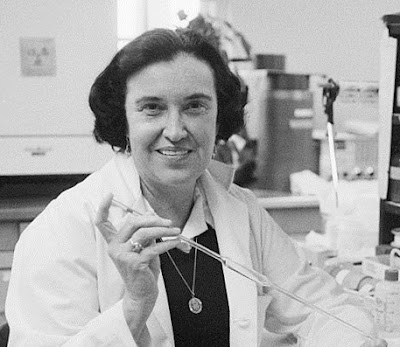
In the early morning hours of October 13, 1977, Rosalyn Sussman Yalow received a phone call with the news that she had won the Nobel Prize in Medicine or Physiology. She was the first American-born woman to win a Science Nobel and only the second woman to win a Nobel Prize in Medicine. However her road to the Nobel Prize was not an easy one.  

In honor of Women’s History month we celebrate the much beloved Judy Baar Topinka.

Judy Barr Topinka's passion for representing the people of Illinois began in 1980 in the House of Representatives. She served 2 years in the House and then was elected to the State Senate where she remained for 10 years.

After 14 years as a member of the Illinois General Assembly, Judy Baar Topinka ran for statewide office. She was chosen in November of 1994 to serve as Illinois State Treasurer becoming the first woman in Illinois history to be elected to that office. 


Celebrating Women's History Month.


The first American woman to win an Olympic event was Margaret Abbott from Illinois. She captured first place in women’s golf at the 1900 Paris Olympic games. Except Abbott would never know she had even competed in the Olympics.

Margaret was born in Calcutta, India in 1878, the daughter of Charles and Mary Abbott. She moved to Illinois as a teenager when her mother became the literary editor for The Chicago Herald. In Illinois, the Abbott women joined the Chicago Golf Club in Wheaton where they competed in local golf tournaments. Margaret was coached by several talented male amateurs including Charles Blair MacDonald and began winning championships. However, mentions of Margaret’s golf wins could only be found in the society pages of local newspapers and not the sports sections.

Celebrating Women's History Month.


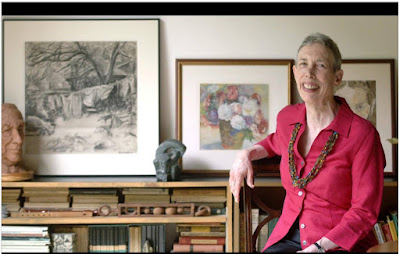
In 2005, Channy Lyons organized an exhibit of women artists who worked in Peoria before 1970. She managed to identify 50 artists but it was no easy task. Researching women artists was a tedious process, made more challenging because most women artists prior to 1940 remained largely anonymous. Tracking them down was thwarted by name changes after marriage, unsigned works or the use of pseudonyms.

Celebrating Women's History Month

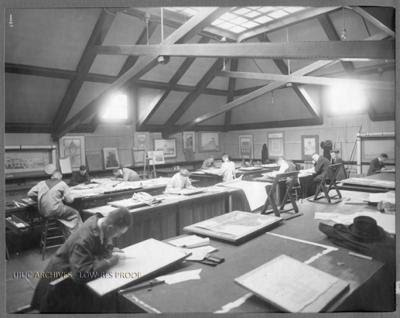
Mary Louisa Page distinguished herself by becoming the first woman in the United States to graduate with an accredited architecture degree. 

Page, born in Metamora, Illinois, in 1849, enrolled in the College of Engineering at University of Illinois (then called Illinois Industrial University) in 1874. She was the first woman at the college to study architecture.

Just across Monroe Street from the Capitol building, the ashes of the Illinois State Armory were still smoldering as state officials worked to determine just how bad the loss was. The 1934 fire had wrecked the building; that much was obvious. But more than just a structure had been lost, and the state had learned an important lesson about protecting irreplaceable artifacts.

As the fire burned, firefighters had wisely decided to direct their hoses toward the tons of ammunition and gunpowder stored in the building (now kept at Camp Lincoln on the outskirts of Springfield, rather than in the middle of downtown). Unfortunately, materials stored in other parts of the building had not been saved, and these included innumerable paper records of Illinois soldiers dating back to the Civil War.
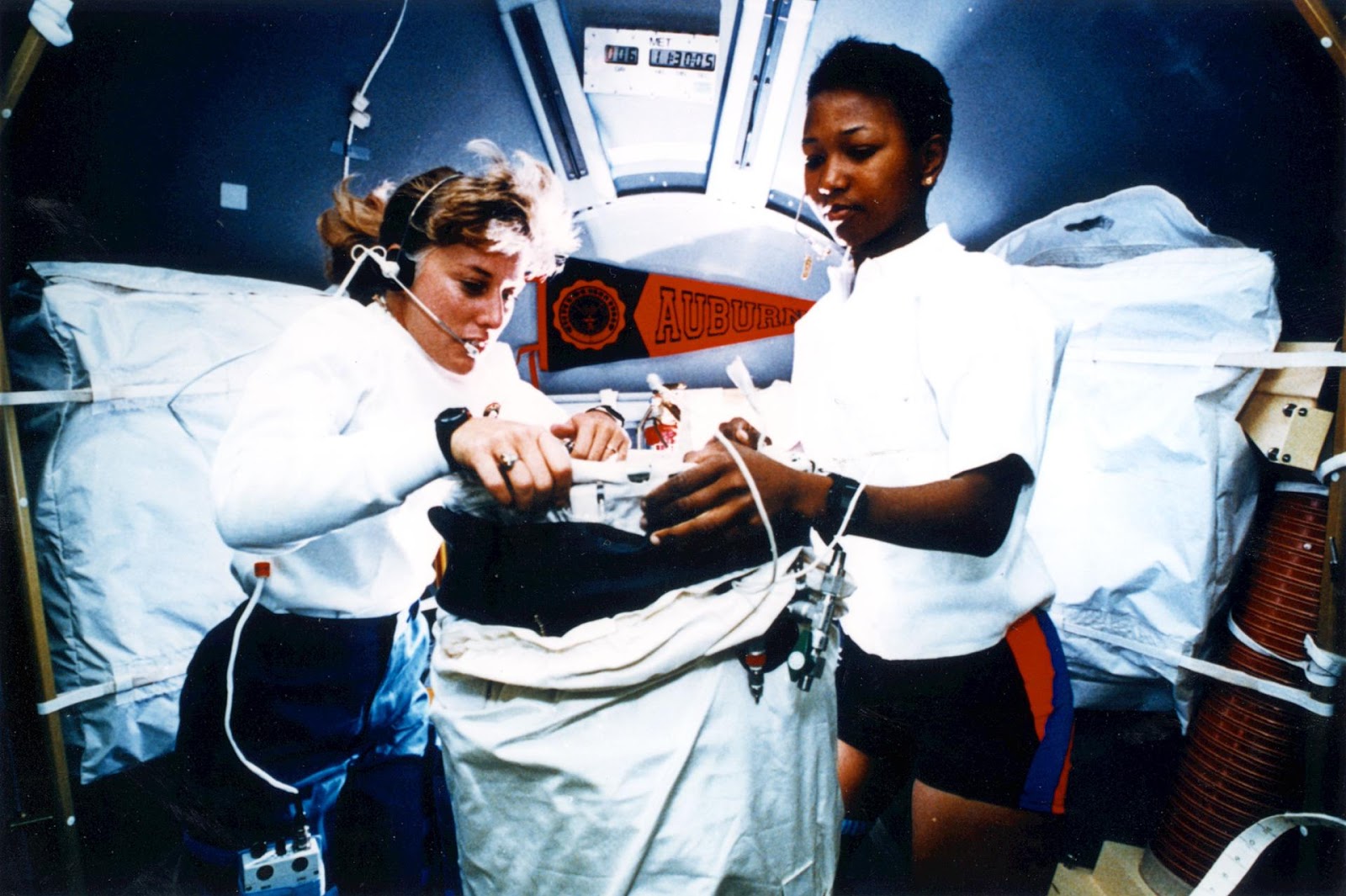
Astronauts N. Jan Davis and Mae C. Jemison.  
In the early days of space flight the U.S. Air Force defined an astronaut as any person who had flown past an altitude of 50 miles above sea level. International governing bodies such as the Federation Aeronautique Internationale went a little higher, placing the dividing line between Earth’s atmosphere and outer space as 100 kilometers, or about 62 miles up, what came to be known as the “Karman Line,” named for Hungarian scientist Theodore von Karman.

Wherever it is physically located, it was definitely the highest-altitude glass ceiling in 1983 when Sally Ride broke through it aboard the space shuttle Challenger and became the first American woman in space. She followed Soviet cosmonauts Valentina Tereshkova (1963) and Svetlana Savitskaya (1982).
Leona Marshall Libby, 1946. 
Three quarters of a century ago, the United States was caught up in the largest and most destructive war in human history. From Alaska’s Aleutian Islands to the tropical south Pacific, from the beaches of Normandy to the deserts of North Africa and the steppes of Russia, battles raged across the globe.

There was also an intense race underway in laboratories far from the battlefields. Albert Einstein had escaped from Nazi Germany and warned President Franklin Roosevelt in 1939 that discoveries were being made and research conducted which, if completed, would lead to the creation of the most terrible weapon ever invented. The weapon would then be in the hands of whomever won that race, and the future of the entire world might very well hang on its outcome.
This spring marks the 150th anniversary of professional baseball in the United States. The celebration will include the arc of baseball history: Tinker-to-Evers-to-Chance, Shoeless Joe, the Gas House Gang, Jackie Robinson, the Go-Go Sox, Brock-for-Broglio, McGwire vs. Sosa, the end of “the Curse” in 2016 and so much more.
Ruth Hanna McCormick and fellow women’s suffragist
Anna Howard Shaw, 1914.
When the 19th Amendment to the U.S. Constitution became law in 1920 it might have extended voting rights to women, but it certainly did not mark the beginning of women’s involvement in American politics. For decades, women had been prominent leaders in the movements for abolition, social welfare, temperance and suffrage, just to name a few. In 1913 Ruth Hanna McCormick had helped lead the fight for the first women’s suffrage law in Illinois.
Illinois state legislators Katherine Hancock Goode, Florence Fifer Bohrer,
Rena Elrod, and Lottie Holman O’Neill pictured in Springfield in 1925.
Photo from the Abraham Lincoln Presidential Library & Museum.
One hundred years ago, Illinois became the first state in the nation to ratify the 19th Amendment, extending equal voting rights to women. It took another year for 35 more states to follow suit, but the Amendment was eventually ratified in August 1920. It did not take long for a pair of Illinois trailblazers to start on their way to becoming the first women elected to the Illinois General Assembly.
Two members of the National Woman’s Party being arrested
as they picket in front of the White House, 1917
When Dr. Anna Howard Shaw arrived in Springfield in the spring of 1919, her accomplishments in the cause of women’s suffrage were well known. A close friend of Susan B. Anthony, Dr. Shaw had been a leader in the fight for equal voting rights since the late 1880s. Even before then she was a trailblazer, as the first woman to become a minister in the Methodist Protestant Church and a powerful voice for the temperance movement. She also picked up a medical degree along the way.