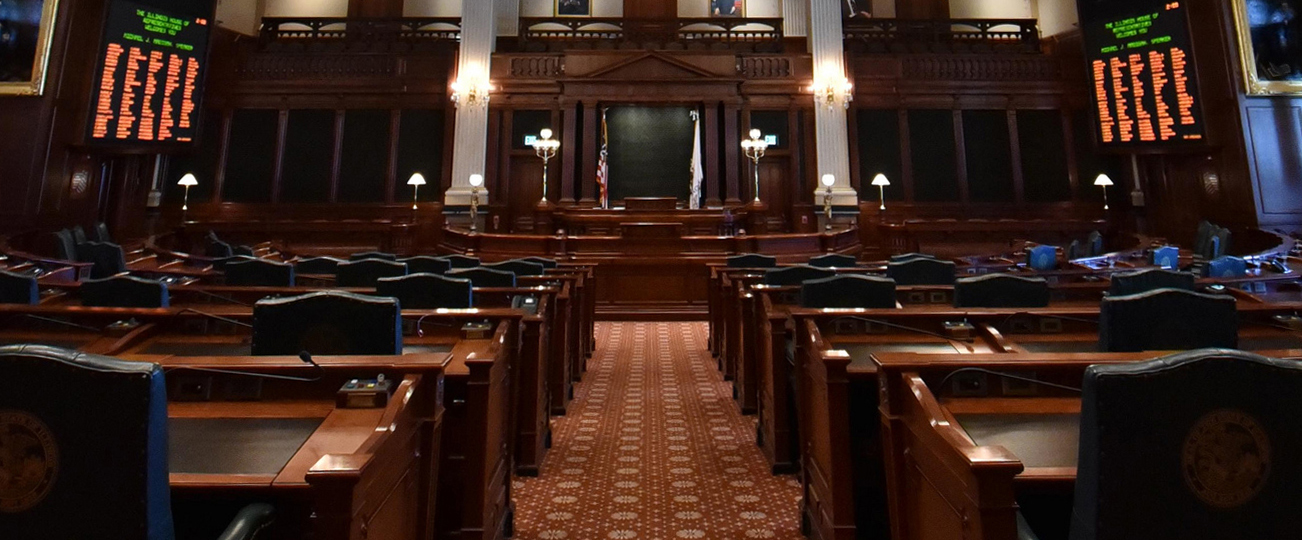
Democrats are meeting in secret, behind closed doors this summer to discuss fundamental changes to the way education is funded in Illinois. As parents and taxpayers, we should be worried — very worried.
History has shown that lame duck sessions are notoriously dangerous for taxpayers. Are these secret meetings a prelude to higher taxes during the upcoming lame duck session?
We are told the basis for discussion by Democrats is Senate Bill 16. Introduced last spring, the bill would shift revenues among school districts and weaken local control. It was never called for a vote in the House and changes to the bill by Democrats will likely look much different. While I appreciate the Senate sponsor’s good intentions and his willingness to take on this issue, his proposal gives to some school districts by taking away from others. If our goal is to provide every student in Illinois with the best possible education, we must strive to build up districts in need without tearing down those who are already doing a good job.
As written, Senate Bill 16 does not provide fair and equitable funding across-the-board. It simply picks new winners and losers. Among the losers would be many suburban and larger downstate school districts whose property taxpayers are already footing a larger share of the bill. Read the entire guest column by House Minority Leader Jim Durkin in the Daily Herald.
In its attempt to get to know each of our elected officials better, INN recently conducted a Q and A session with State Rep. Mike Fortner, R-West Chicago. Here’s what he had to say:
What’s one thing you’re proud of from the Illinois legislature in recent sessions?
“I think the fact that we were able to work on a bipartisan basis to get the fracking bill done was really good. We did it in a way that brought both industry and environmental groups to the table to produce a fully negotiated bill. It’s been slow going since then, but this is an example of a successful bill coming out of a situation where all stakeholders were included in the discussion.”
What’s the biggest problem the state faces and what is the solution?
“Well I’m not sure what the solution is, but in my mind the state of our budget – that we can’t get a handle on doing things in a consistent way so that we can stay abreast of our revenues. Sometimes we do well for a year or so but usually we go back to borrowing from the future to pay for what we want now.” Read more by Brady Cremeens on the Illinois News Network.
A legislative panel said Tuesday that it wants more time to decide whether rules written by the Department of Natural Resources to govern hydraulic fracturing in Illinois can take effect.
The legislature's Joint Committee on Administrative Rules received proposed rules for high-volume oil and gas extraction from the DNR on Aug. 29, after the agency reworded some rules based on more than 30,000 comments on it original draft. But industry and environmental groups said they would ask JCAR to seek dozens of changes.
The panel originally had 45 days --until mid-October -- to act on the rules, but exercised a 45-day extension, asking the DNR to ensure the rules comply with the intent of a law passed last year after intense negotiations that included industry and environmental groups. Read the AP story in the Daily Herald.
Today the Joint Committee on Administrative Rules (JCAR) unanimously agreed to delay implementation of the controversial rules on Hydraulic Fracturing in Illinois proposed by Governor Quinn’s administration. Instead they sent the rules back to The Illinois Department of Natural Resources (IDNR) for changes. Some members felt the current proposed rules were in direct conflict with a carefully negotiated law signed into effect in 2013. JCAR is tasked with ensuring administrative rules comply with state statute.
A new subpoena seeking records about Gov. Pat Quinn's botched 2010 anti-violence program has been issued, this time from a federal grand jury based in Chicago.
The request marks the first subpoena issued by Chicago-based federal authorities in the probe into Quinn's $54.5 million Neighborhood Recovery Initiative. Numerous prior subpoenas had come from federal authorities in Springfield.
(The development means an additional set of federal authorities are looking into Quinn's $54.5 million Neighborhood Recovery Initiative beyond those working on a probe in progress in Springfield.)
The federal grand jury in Springfield has subpoenaed emails from the governor's former chief of staff, Jack Lavin, and several others heavily involved in implementing the program. The administration did not respond immediately to requests for comment today. Ray Long and Monique Garcia have the story in the Chicago Tribune.
Waist-high weeds and a crumbling old Chevy mark the entrance to a rust-colored factory complex on the edge of town here, seemingly another monument to the passing of the golden age of American industry.
But deep inside the 14-acre site, the thwack-thwack-thwack sound of metal on metal tells a different story.
“We’re holding our own,” said Greg Hess, who is looking to hire draftsmen and machine operators at the company he runs, Youngstown Bending and Rolling. “I feel good that we saved this place from the wrecking ball.”
The turnaround is part of a transformation spreading across the heartland of the nation, driven by a surge in domestic oil and gas production that is changing the economic calculus for old industries and downtrodden cities alike. Nelson D. Schwartz has the story in the New York Times.
Downstate – Fracking Rules
Fracking advocates call for new rules. Horizontal drilling into shale beds for Illinois oil and gas (fracking) was legalized by SB 1715 in spring 2013. Implementation of fracking was delayed for more than one year, however, because the Illinois Department of Natural Resources (IDNR), an arm of the Quinn administration, was writing administrative rules to implement the new law and enable engineering crews to apply for drilling permits.
Subscribe to:
Posts
(
Atom
)


