Showing posts with label Veto Session. Show all posts
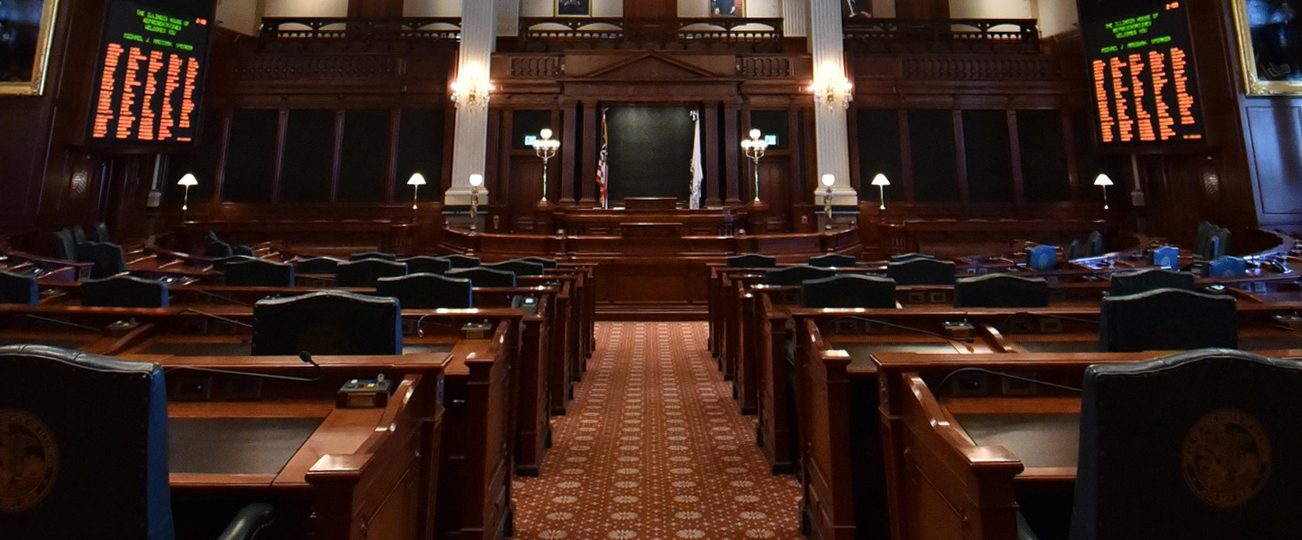
On October 14, 2025, the Illinois General Assembly returns to Springfield after the summer adjournment period comes to an end.

The annual Veto Session, for decades, was used by lawmakers to consider voting to override vetoes leveled by the governor on bills that were passed during the previous spring Session. In recent years, the Veto Session has been used by Democrats to ram through tax increases, erode Second Amendment Rights, and pass new legislation unrelated to veto action. Governor Pritzker has vetoed very few bills in recent years, as Democrats hold supermajorities in both the House and Senate, and rarely pass legislation that would see the governor exercise his veto authority. 
In a couple of weeks, the Illinois General Assembly will return to Springfield to convene for the annual two-week Veto Session. The session is scheduled for October 14-16 and October 28-30. The Veto Session is generally intended for the legislature to review legislation passed in the spring that has received a total veto or an amendatory veto from the Governor. The legislature can seek to override a Governor’s veto by a 3/5 majority vote in each chamber or vote to accept an amendatory veto. 
In the Illinois General Assembly, lawmakers convene in Springfield for two different legislative sessions during the year. The first of the two is Spring Session or Regular Session, taking place from January through the end of May, adjourning with the passage of the state budget. The second session is Veto Session, spanning over two weeks, typically between October and November.

The Illinois Constitution provides the Governor with four possible veto alternatives, below is a brief description of each:

Total Veto
The Governor can veto an entire bill by returning it with his objections to the chamber in which it originated. The General Assembly can override this veto by a vote of three-fifths of the members elected to each chamber.

Item Veto
The Governor can veto any item of appropriations in a bill by returning it to the chamber in which it originated. The General Assembly can override this veto by a vote of three-fifths of the members elected to each chamber.
State Representative Sheri Jesiel attended her first session in the Illinois House of Representatives this week. Jesiel was welcomed to the chamber by her new colleagues and immediately took up her duties of the veto session concerning legislation vetoed by Governor Quinn this summer.

“I would like to thank my colleagues for their warm welcome to the chamber,” said Jesiel. “JoAnn Osmond was a wonderful Representative for the 61st District with big shoes to fill. I hope to carry-on in her foot-steps, and that of her husband Tim before her, in bringing sensible, fiscally responsible leadership to Springfield for the sake of the residents of the 61st District.”  Read more.


Lawmakers return to Springfield this week for the 2014 Veto Session. Earlier this year, Governor Quinn issued either a partial or full veto of ten bills. He also issued a line item veto to HB3793, one of the FY15 appropriations bills.

Read more about the vetoes.

The Illinois Constitution provides the Governor with four possible veto alternatives, below is a brief description of each:

Total Veto:  The Governor can veto an entire bill by returning it with his objections to the chamber in which it originated. The General Assembly can override this veto by a vote of three-fifths of the members elected to each chamber.

Item Veto: The Governor can veto any item of appropriations in a bill by returning it to the chamber in which it originated. The General Assembly can override this veto by a vote of three-fifths of the members elected to each chamber.