 |
| A Union battery at Fort Prentiss (renamed Fort Defiance), with guns facing the Ohio River, Cairo, Illinois. |
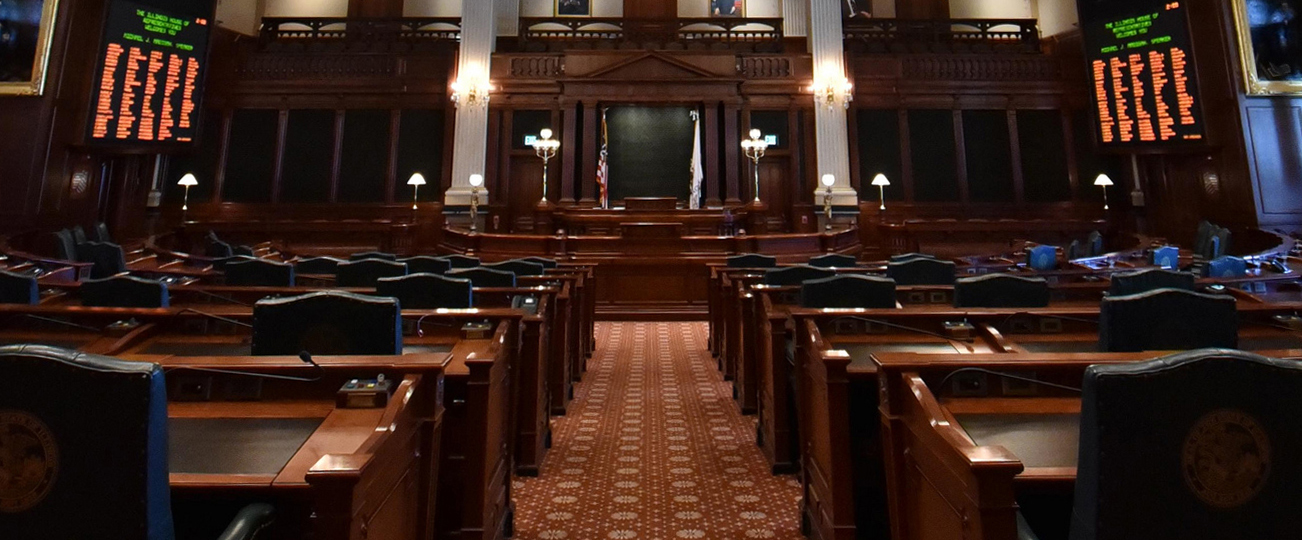


Omnibus energy bill signed. After approval by both houses of the General Assembly, SB 2408 was signed into law on Wednesday, September 15. A key element of the energy bill and its approval was the continued operation of two nuclear power plants (Byron and Dresden). In return for electric rate guarantees contained in the bill, owner Exelon has made a binding pledge to keep these two plants open for at least five years. This pledge directly affects more than 1,530 employees of the two plants, together with the communities that are directly supported by their operations.

Spring had seen the U.S. Congress adopt legislation entitled
the Illinois Enabling Act which would pave the way for statehood. It was signed
by President James Monroe in April, setting Illinois on the path toward
becoming the 21st state.
The act of Congress had established boundaries for the new
state and authorized local leaders in the land between the Wabash and the
Mississippi to get to work on establishing a state government, including the
election of new leaders. There was much to do.
Illinois House passes omnibus energy legislation. The Illinois House of Representatives returned to session in Springfield on Thursday, September 9. On the agenda was a comprehensive energy bill dealing with various facets of Illinois’ energy and electricity supplies. The bill action followed notification to Illinois by Exelon, the operator of nuclear power plants in northern Illinois, that several of its fleet of nuclear plants were unprofitable and, without action by the General Assembly, would soon be decommissioned. This news threatened the operation of two Illinois nuclear power plants, Byron and Dresden. Exelon asked the General Assembly for state regulatory relief so that these two plants could remain open, protecting Illinois’ electric generation capacity and saving thousands of good-paying jobs.

The easy portage between the lake and the mid-continent’s
river system made his new home the linchpin of a trading network that could one
day cover thousands of square miles. The location was good, but the land was
not all it could be. Most of it was swampland, and that was going to make it
difficult to build a city.
Democrats ram through revised partisan maps during special session. Following the release of the 2020 Census numbers in early August, the Illinois General Assembly met in special session on Tuesday, August 31 to vote on revised legislative redistricting maps.
What we have witnessed over the past week has been the continuation of a grand farce that began in the spring, when a partisan map-making process played out in a backroom behind a locked door using inaccurate and incomplete data that produced flawed maps drawn by politicians.
 |
| Vandalia State House. Photo from the Abraham Lincoln Presidential Library & Museum. |
With statehood in 1818, Kaskaskia became the first state capital, but its days were already numbered, as the frequent floods of the Mississippi made it difficult to build a permanent capital on its banks. Congress had not designated any particular site as a permanent state capital, and the General Assembly had only picked Kaskaskia until a better location could be found. By the time the 1st General Assembly convened in 1819, the search was already underway.
Subscribe to:
Posts
(
Atom
)