We also talk about his travels around his large 106th district, his days as a school teacher, Gospel singing, and time with his grandkids.
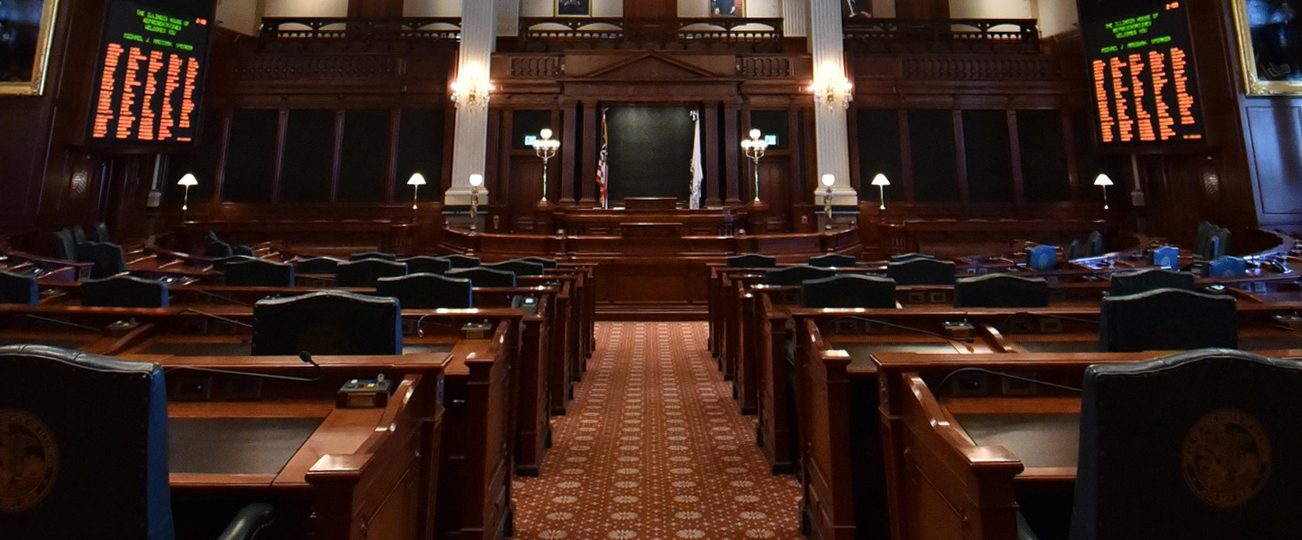
State Representative Tom Bennett of Gibson City talks about his plans for the spring session and the changes in the process he believes are needed in order to accomplish real reform.
We also talk about his travels around his large 106th district, his days as a school teacher, Gospel singing, and time with his grandkids.
As a military veteran Rep. Dan Swanson brings a unique perspective to Springfield. He understands better than most that many of the brave women and men who honorably served their country now find themselves in need of our help. He gets that honor and other circumstances sometimes prevent veterans from asking for assistance. And he is alarmed by the staggering number of veterans who turn to suicide as a solution. Rep. Swanson also knows from his advocacy that proactivity is the best way to get resources in the hands of veterans. So, he is taking action.
Earlier this month, Rep. Swanson filed legislation that provides a mechanism for law enforcement to immediately respond to a missing veteran. Under Swanson’s bill law enforcement can issue a Silver Alert for a missing veteran. Like an Amber alert, the public will be notified in an effort to quickly locate a missing veteran and perhaps save a life.
We think Rep. Swanson’s HB4212 is legislation you should know about.
Read the text of HB4212.
Earlier this month, Rep. Swanson filed legislation that provides a mechanism for law enforcement to immediately respond to a missing veteran. Under Swanson’s bill law enforcement can issue a Silver Alert for a missing veteran. Like an Amber alert, the public will be notified in an effort to quickly locate a missing veteran and perhaps save a life.
We think Rep. Swanson’s HB4212 is legislation you should know about.
Read the text of HB4212.
If you are a veteran in crisis or are concerned about one please reach out to the Veterans Crisis Line at 1-800-273-8255 and press 1.
In the 1920s, the first map of the proposed federal numbered highway system had been released. The most prominent east-west numbered highways were those ending with in zero. But a few states had been bypassed by every one of the round-numbered highways: a blow to their national prestige.
Some of those states’ representatives took their complaints to the proper authority, and some of the roads were dutifully re-numbered. More states got round-numbered federal highways and Illinois ended up as the hub of the most famous highway in the world: Route 66.
While imposing a stiff prison sentence on former Gov. Rod Blagojevich, U.S. District Judge James Zagel contemplated an issue that, just over six years later, continues to debase this state’s prosperity.
“In the United States, we don’t much govern at gunpoint,” Zagel told the courtroom on Dec. 7, 2011. “We require willing and creative cooperation and participation to prosper as a civil society. This happens most easily when people trust the person at the top to do the right thing most of the time, and more important than that, to try to do it all of the time.”
Corruption at the top tears and disfigures the “fabric of Illinois” and is “not easily or quickly repaired,” Zagel said.
Trust in government is essential to civil society — not only governance that is corruption-free but also competent and responsible. Read the rest of the commentary by Tribune Editorial Board member Kristen McQueary.
BUDGET
Revenues up, but overall budget picture clouded by poor retail spending numbers. The December 2017 State revenue report by the Commission on Government Forecasting and Accountability (COGFA) shows that State revenues rose by $438 million over comparable levels in December 2016, an increase of 15.4%. This increase is helping to pay off some of the $8.7 billion backlog of unpaid State bills.
However, the Commission’s economic team has called the General Assembly’s attention to areas of weakness within the revenue numbers. Sales tax receipts declined by 4%, or $34 million, on a year-over-year basis within the overall revenue increase. The poor sales tax numbers were attributed by economists to the continuing challenges faces by participants in the U.S. retail sector.
Revenues up, but overall budget picture clouded by poor retail spending numbers. The December 2017 State revenue report by the Commission on Government Forecasting and Accountability (COGFA) shows that State revenues rose by $438 million over comparable levels in December 2016, an increase of 15.4%. This increase is helping to pay off some of the $8.7 billion backlog of unpaid State bills.
However, the Commission’s economic team has called the General Assembly’s attention to areas of weakness within the revenue numbers. Sales tax receipts declined by 4%, or $34 million, on a year-over-year basis within the overall revenue increase. The poor sales tax numbers were attributed by economists to the continuing challenges faces by participants in the U.S. retail sector.
![]() |
| Photo from the Illinois State Library General Collection, IL Digital Archives. A service of the Illinois State Library and Illinois Secretary of State. |
The first was in 1893. Known as the World’s Columbian Exhibition, the 1893 World’s Fair was the second to be held in the United States, following Philadelphia’s 1876 Centennial Exposition. The fair opened in May in 14 Beaux Arts-style “great buildings” and nearly 200 smaller structures, most of which were built specifically for the fair. The white stucco coverings for the buildings; which were designed by such famed architects of the time as Frederick Law Olmstead and Daniel Burnham; combined with the bright lighting used to illuminate the fair at night to give rise to the nickname for the fair’s grounds: the White City.
Illinois’ new Invest in Kids scholarship program — which gives low- to middle-income students opportunities to attend non-public schools that best meet their educational goals — attracted more than $36 million in pledged contributions on Tuesday, Jan. 2, the first day the state began accepting applications, Gov. Bruce Rauner announced today.
Taxpayers can contribute up to $1.3 million to eligible organizations and receive an income tax credit equal to 75 percent of their approved contributions. The state caps total yearly contributions at $100 million.
Subscribe to:
Posts
(
Atom
)


